




Panametrics Aurora TDLAS Analyzer Ensures Accurate Moisture Control in Refinery Recycle Gas
Summary
Catalytic reforming converts low-octane heavy naphtha into high-octane reformate for gasoline production. Dried naphtha feedstock passes through a reactor containing a platinum catalyst bed at high temperature and pressure, and the unconverted recycle gas is returned to the reactor to increase conversion. Moisture content in this recycle gas stream must be tightly controlled – typically between 10 and 25 ppmv – to keep the catalyst active without accelerating corrosion.
Application
The catalyst is activated by injecting chlorides together with a controlled amount of moisture. Too much moisture forms hydrochloric acid, corroding metal infrastructure and shortening catalyst life; too little moisture deactivates the catalyst. Continuous moisture measurement of the recycle gas keeps the feed dryers working efficiently and the moisture injection rate correct.
| Medium | Hydrogen-rich recycle gas (catalytic reformer) |
|---|---|
| Optimal moisture range | 10 – 25 ppmv |
| Moisture range on startup | 0 – 1 000 ppmv |
| Moisture range – normal operation | 0 – 50 ppmv |

Benefits:
- Rapid response to moisture changes, typically within seconds
- No drift in calibration – no need for recalibration, lower maintenance
- Non-contact measurement – no wear from HCl or other contaminants
- Integral sample system minimizes interference from other process components
Challenge
Moisture in hydrogen recycle gas has traditionally been monitored using Quartz Crystal Microbalance (QCM) or Aluminum Oxide sensors. Aluminum Oxide probes can be damaged during start-up or upset conditions when high moisture and corrosive gases occur together, requiring spare probes and annual calibration – the resulting OPEX can offset the low initial CAPEX. QCM analyzers include on-board calibration to keep readings accurate, but the high CAPEX, plus the OPEX of maintaining the purifier and permeation tube and the cost of replacing damaged sensors, add up over time.
Solution
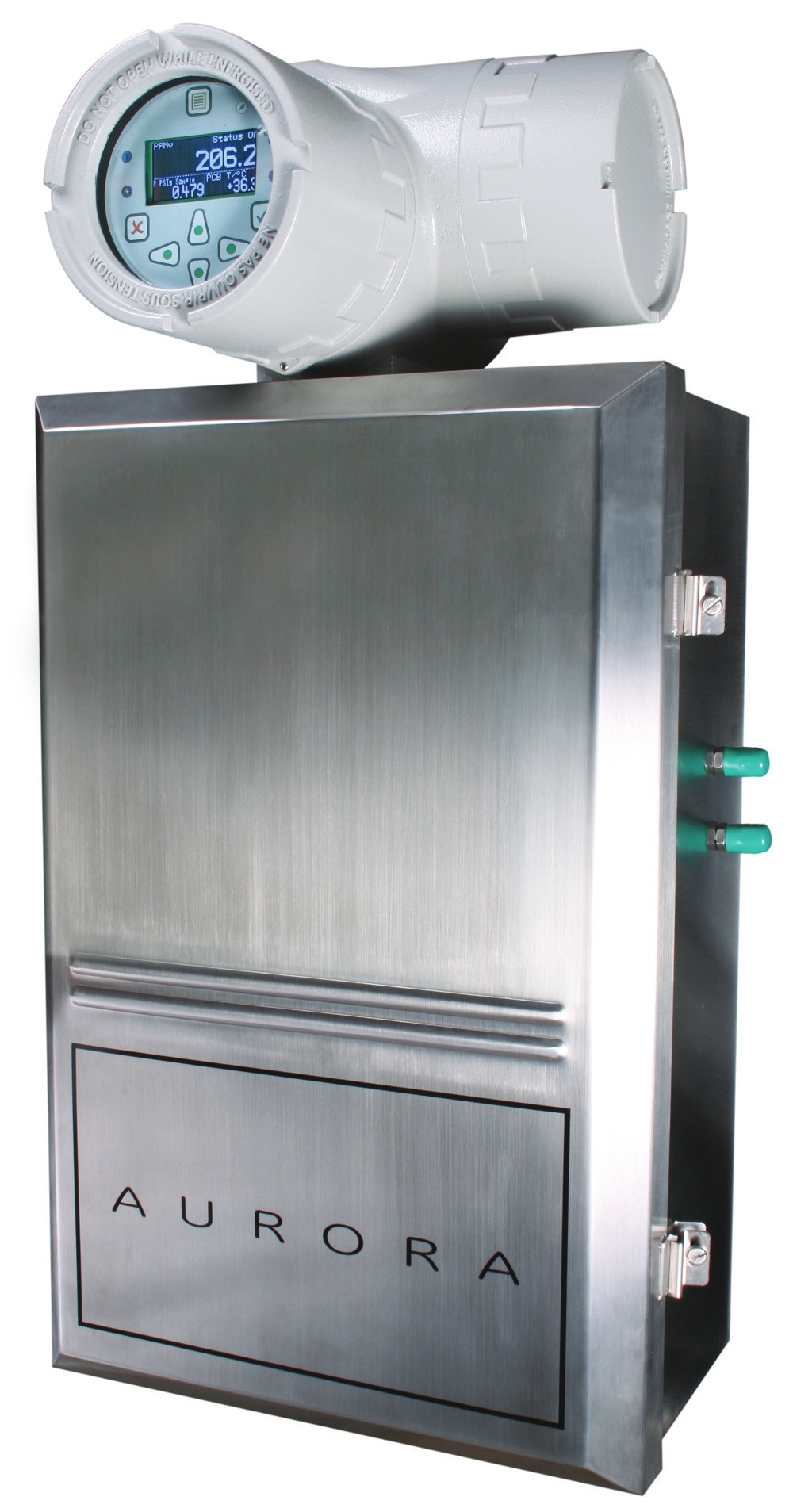
The Panametrics Aurora analyzer uses tunable diode laser absorption spectroscopy (TDLAS) to measure moisture in refinery recycle gas accurately and reliably. Certified for hazardous areas, its stainless-steel construction and inert wetted parts make it immune to drift and resistant to contaminants. A built-in sample conditioning system means no pre-conditioning is required – simply connect the process gas and start measuring. A backlit, three-parameter LCD provides a direct readout of the measured values plus system status, with hard-wired mA outputs and MODBUS digital communication for integration into the plant control system.
Source: Panametrics Application Note PANA138AN (panametrics.com) — © Panametrics LLC. Localized and adapted by INTECH CONTROL, official Panametrics representative in the Slovak Republic and Hungary.