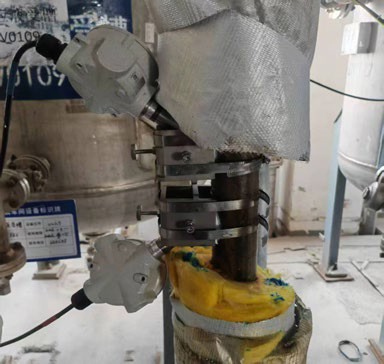

Liquid Hydrocarbon Tank Dewatering with Clamp-On Ultrasonic Technology
Storage tanks for liquid hydrocarbons can accumulate residual, sometimes salty water. It may be carried over from crude oil that was not fully separated, or it can enter the tank through improper venting, leaks in the floating roof, a damaged rainwater drain hose and similar causes. Because water and liquid hydrocarbons differ in density and in the speed of sound, the water settles at the bottom of the tank, often accompanied by bacterial degradation of the petroleum product. To keep products within specification, this water must be kept out of further processing and finished products.
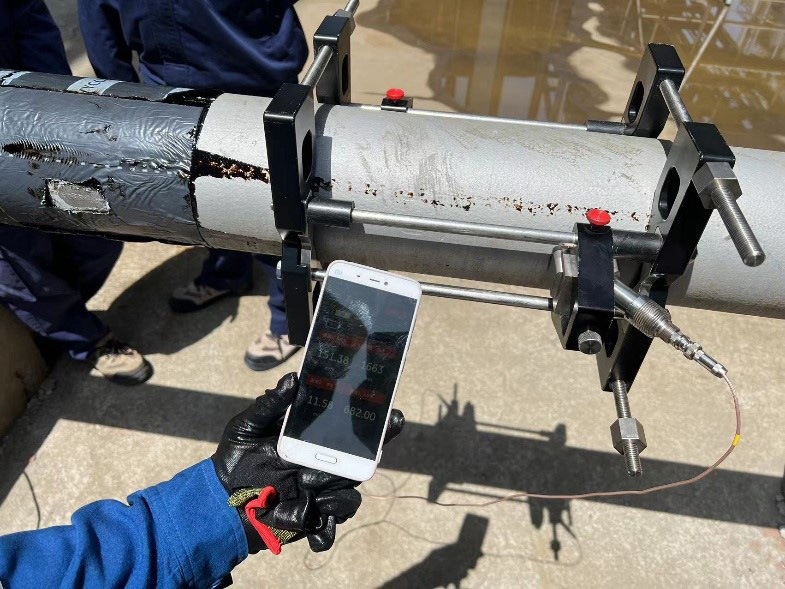
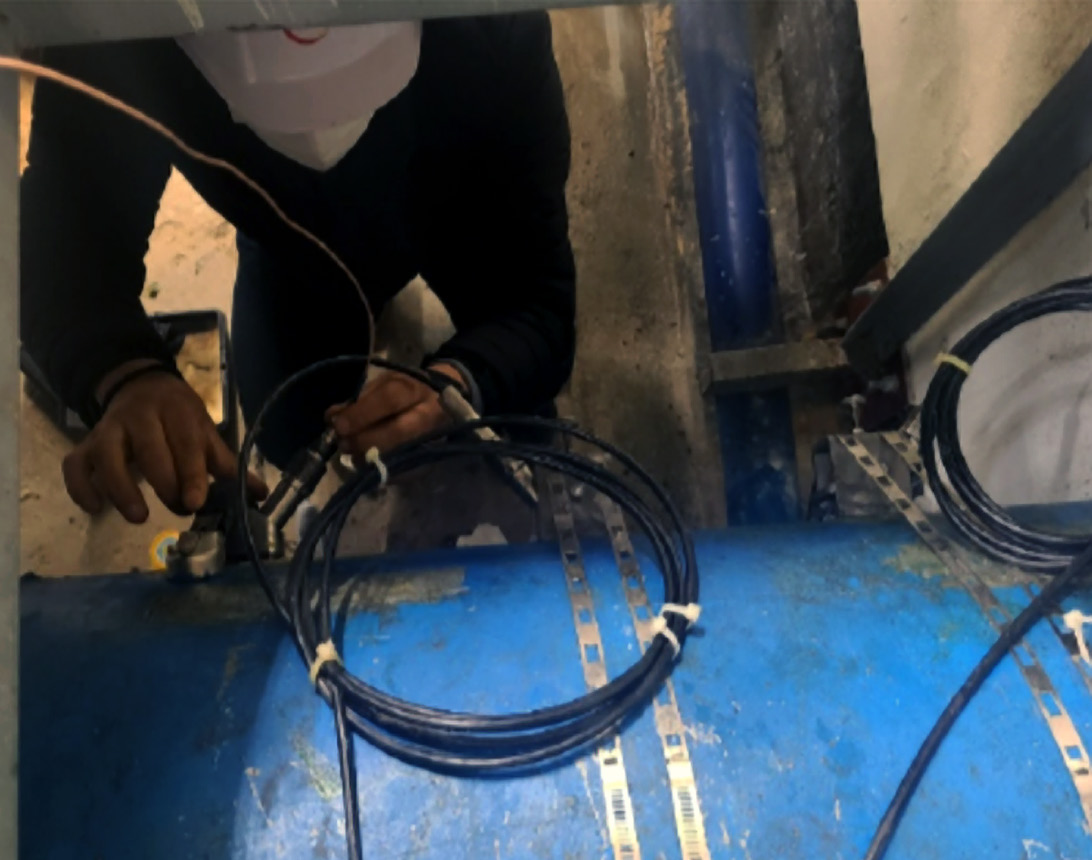
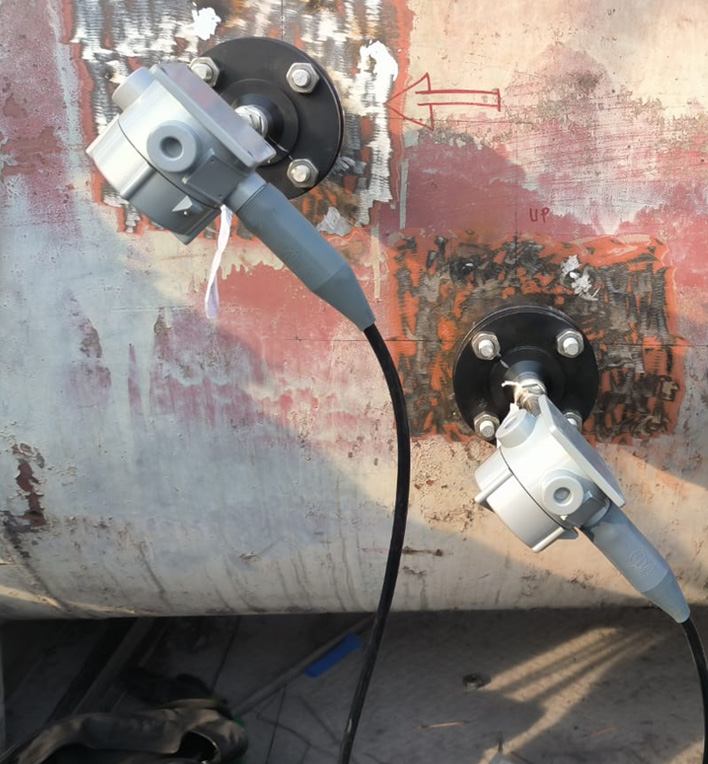
Panametrics offers a safe, cost-effective and reliable ultrasonic transit-time solution for tank dewatering. The non-intrusive technology evaluates the speed of sound in the fluid together with the standard deviation of the meter signal strength.
Application
| Application | Dewatering of liquid hydrocarbon storage tanks |
|---|---|
| Measuring point | Tank outlet line |
| Task | Detection of the water / liquid hydrocarbon interface |
| Measuring principle | Ultrasonic transit time, transducers mounted outside the pipe (non-intrusive) |
| Evaluated parameters | Speed of sound, standard deviation of signal strength |

Benefits:
- Cost-effective solution
- Easy installation and start-up under operating conditions
- No maintenance or recalibration – drastically lower operating costs
- High sensitivity and reliability in detecting water and hydrocarbon
- Prevents contamination of processing units, significantly reducing operating costs
- Prevents pollution and safety risks
Challenge
Dewatering at the tank outlet depends on reliably detecting the interface between water and liquid hydrocarbon. Several methods are used for this purpose – conductivity (the most common solution), capacitance, microwave or gamma-source techniques. Most of them, however, require a probe protruding into the process. Such probes are prone to build-up, which causes reliability issues and frequent, costly maintenance, and gamma-source devices additionally introduce safety hazards.
Solution
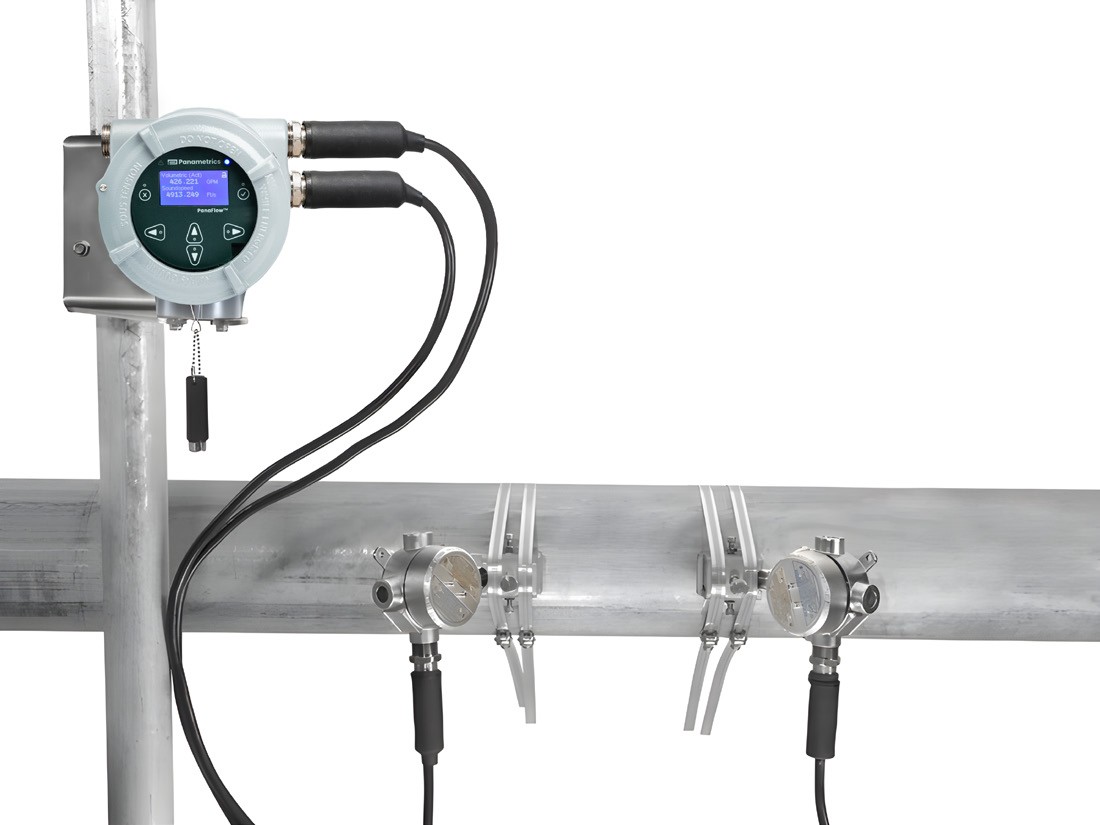
With the Panametrics ultrasonic transit-time method, operators detect the change of fluid by monitoring variations in the speed of sound and the increase in the standard deviation of the signal strength caused by emulsions. The Panametrics PanaFlow LC clamp-on flowmeter with the XMT1000 transmitter provides a reliable, cost-effective, maintenance-free and highly responsive solution. Because the transducers are mounted on the outside of the pipe, they are not subject to wear and tear over time.
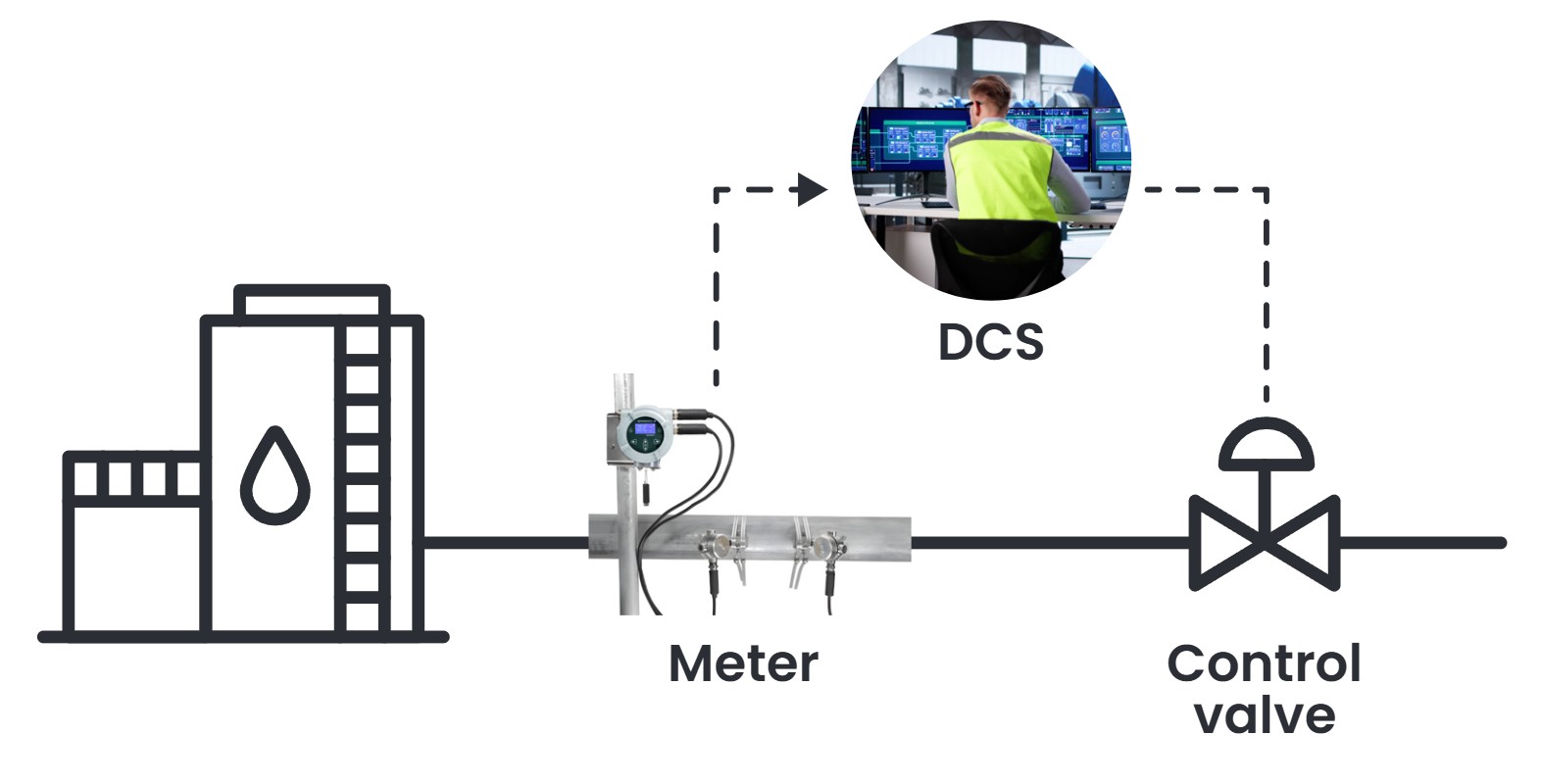
The system detects even the slightest changes in the speed of sound and signal strength and feeds the control logic (DCS), which operates the control valves. Water and contaminated liquid hydrocarbons are directed to the water treatment and slops units, while the liquid hydrocarbon continues to the treatment unit or to the plant outlet – ships, trains, trucks or pipelines – without losing time and money on contaminated products.
Panametrics PanaFlow LC clamp-on ultrasonic liquid flowmeter
Datasheet (PDF) Panametrics PanaFlow LCSource: Panametrics Application Note PANA127AN (panametrics.com) — © Panametrics LLC. Localized and prepared by INTECH CONTROL, official Panametrics representative for Slovakia and Hungary.